Doubly Linked List Operations
A Doubly Linked List (DLL) is an advanced linear data structure where each node contains three parts:
-
Data
-
Pointer to the previous node
-
Pointer to the next node
This two-way linking allows forward and backward traversal, making certain operations more efficient than in singly linked lists.
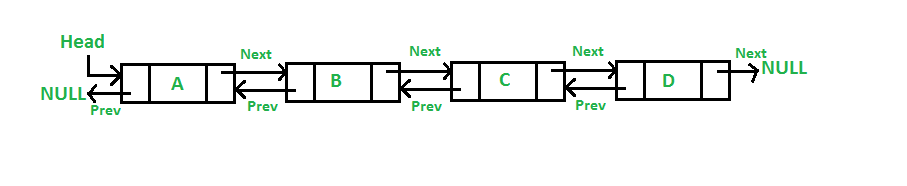
Structure of a Doubly Linked List Node
struct Node {
    int data;
    Node* prev;
    Node* next;
};
You may visit Lesson 06: More Operations of Singly Linked List (With C++ Examples)
1️⃣ Insert at the Beginning
📌 Definition
Inserts a new node at the start (head) of the doubly linked list.
💡 Real-World Use Case
Adding a recently opened file to the beginning of a history list.
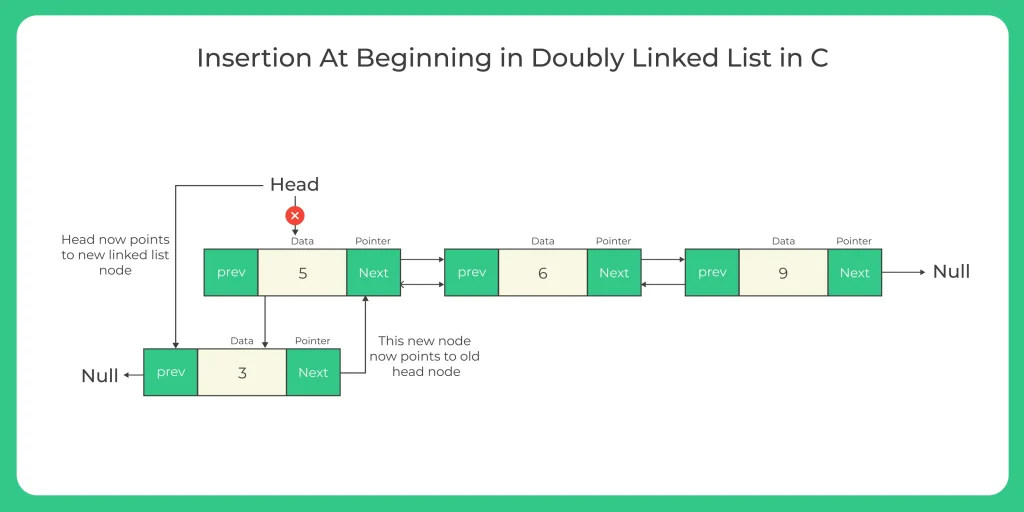
💻 C++ Code
void insertAtStart(Node*& head, int value) {
    Node* newNode = new Node();
    newNode->data = value;
    newNode->prev = nullptr;
    newNode->next = head;

    if (head != nullptr)
        head->prev = newNode;

    head = newNode;
}
2️⃣ Insert at the End
📌 Definition
Adds a new node at the end (tail) of the list.
💡 Real-World Use Case
Appending songs to the end of a music playlist.
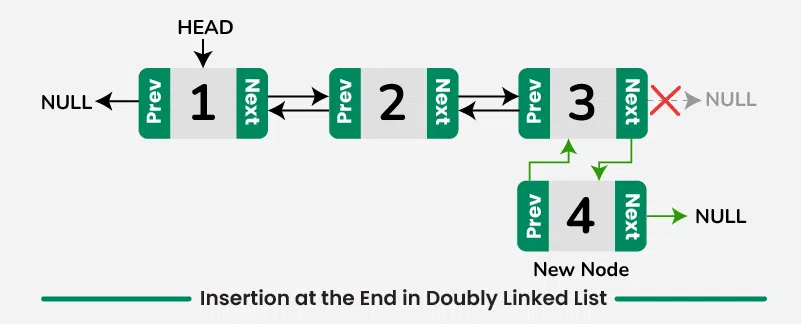
💻 C++ Code
void insertAtEnd(Node*& head, int value) {
    Node* newNode = new Node();
    newNode->data = value;
    newNode->next = nullptr;

    if (head == nullptr) {
        newNode->prev = nullptr;
        head = newNode;
        return;
    }

    Node* temp = head;
    while (temp->next != nullptr)
        temp = temp->next;

    temp->next = newNode;
    newNode->prev = temp;
}
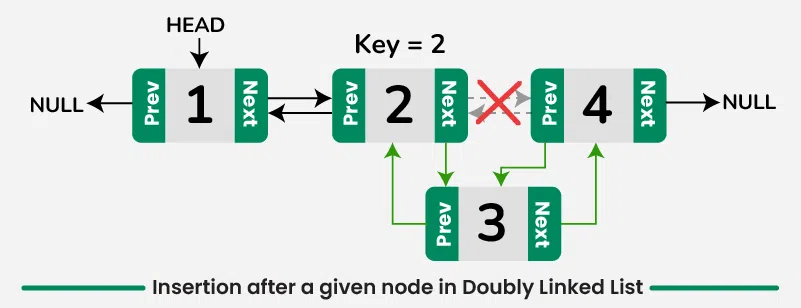
3️⃣ Insert After a Specific Value
📌 Definition
Inserts a new node after a given value.
💡 Real-World Use Case
Inserting a new step after an existing step in a workflow.
💻 C++ Code
void insertAfterValue(Node* head, int target, int value) {
    Node* temp = head;

    while (temp != nullptr && temp->data != target)
        temp = temp->next;

    if (temp != nullptr) {
        Node* newNode = new Node();
        newNode->data = value;
        newNode->next = temp->next;
        newNode->prev = temp;

        if (temp->next != nullptr)
            temp->next->prev = newNode;

        temp->next = newNode;
    }
}
LAB 03: Doubly Linked List
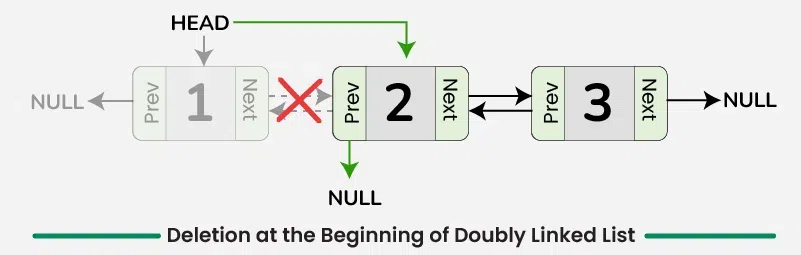
4️⃣ Delete from the Beginning
📌 Definition
Deletes the first node of the doubly linked list.
💡 Real-World Use Case
Removing the oldest entry from a cache.
💻 C++ Code
void deleteFromStart(Node*& head) {
    if (head == nullptr) return;

    Node* temp = head;
    head = head->next;

    if (head != nullptr)
        head->prev = nullptr;

    delete temp;
}
5️⃣ Delete from the End
📌 Definition
Deletes the last node of the list.
💡 Real-World Use Case
Removing the last undo operation.

💻 C++ Code
void deleteFromEnd(Node*& head) {
    if (head == nullptr) return;

    if (head->next == nullptr) {
        delete head;
        head = nullptr;
        return;
    }

    Node* temp = head;
    while (temp->next != nullptr)
        temp = temp->next;

    temp->prev->next = nullptr;
    delete temp;
}
📊 Time Complexity Summary
| Operation | Time Complexity |
|---|---|
| Insert at Start | O(1) |
| Insert at End | O(n) |
| Insert After Value | O(n) |
| Delete from Start | O(1) |
| Delete from End | O(n) |
| Traversal | O(n) |
✅ Advantages of Doubly Linked List
-
Bidirectional traversal
-
Easier deletion operations
-
Efficient backward navigation
❌ Disadvantages
-
Extra memory overhead
-
More complex pointer handling
🎯 Key Takeaway
A doubly linked list is ideal when two-way traversal and efficient deletion are required, such as in navigation systems, editors, and operating systems.
Visit Next Lesson 08: Circular Linked List
Are you interested in developing mobile application development skills? You may visit the link below:
https://onlineskilllab.com/2025/11/18/how-to-build-a-complete-flutter-authentication-system-with-firebase-login-signup-reset-password-dashboard/
If you are learning and enjoying, subscribe to our blog for daily updates.